Brühl's Terrace
Brühl's Terrace (Brühlsche Terrasse) is a promenade on the Elbe side of Dresden's old town, standing on part of the city's old fortifications.
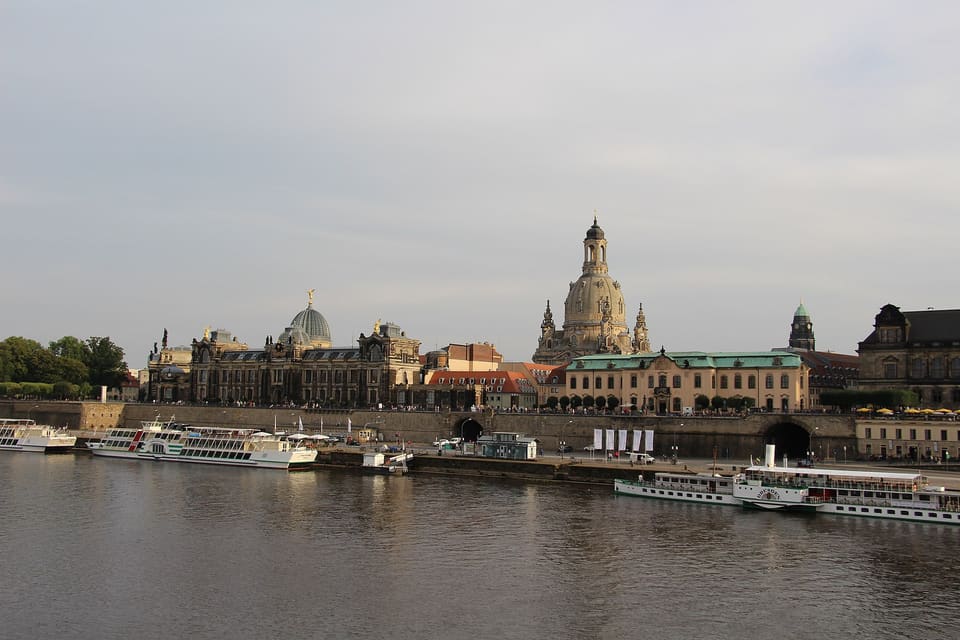
Fred Romero from Paris, France Wikimedia Commons CC BY 2.0
What it is
The terrace is also known as the “Balkon Europas” (Balcony of Europe). The Saxon heritage office credits Alexander von Humboldt with the name.
Saxony's monument register lists the terrace, the fortress remains, the staircase and its figure groups as a group.
History
In the mid-16th century Moritz of Saxony had Dresden fortified with a modern bastion fortress, to plans by Caspar Voigt von Wierandt. From the late 1740s Heinrich von Brühl, Saxony's prime minister, had gardens and buildings laid out on the Elbe side of the fortress wall.
The city's fortifications were demolished from 1814, but the Elbe front was left standing. The terrace was opened to the public in 1814, and the Great Staircase (Große Freitreppe) from Schlossplatz up to the terrace dates from the same year. The figure groups on the staircase, Vier Tageszeiten (the Four Times of Day), are dated 1905–1908.
Under the terrace
Parts of the Renaissance fortress survive beneath the terrace, among them the casemates and the Ziegeltor gate. On 30 November 2019 the fortress was reopened to visitors as the exhibition Festung Xperience.